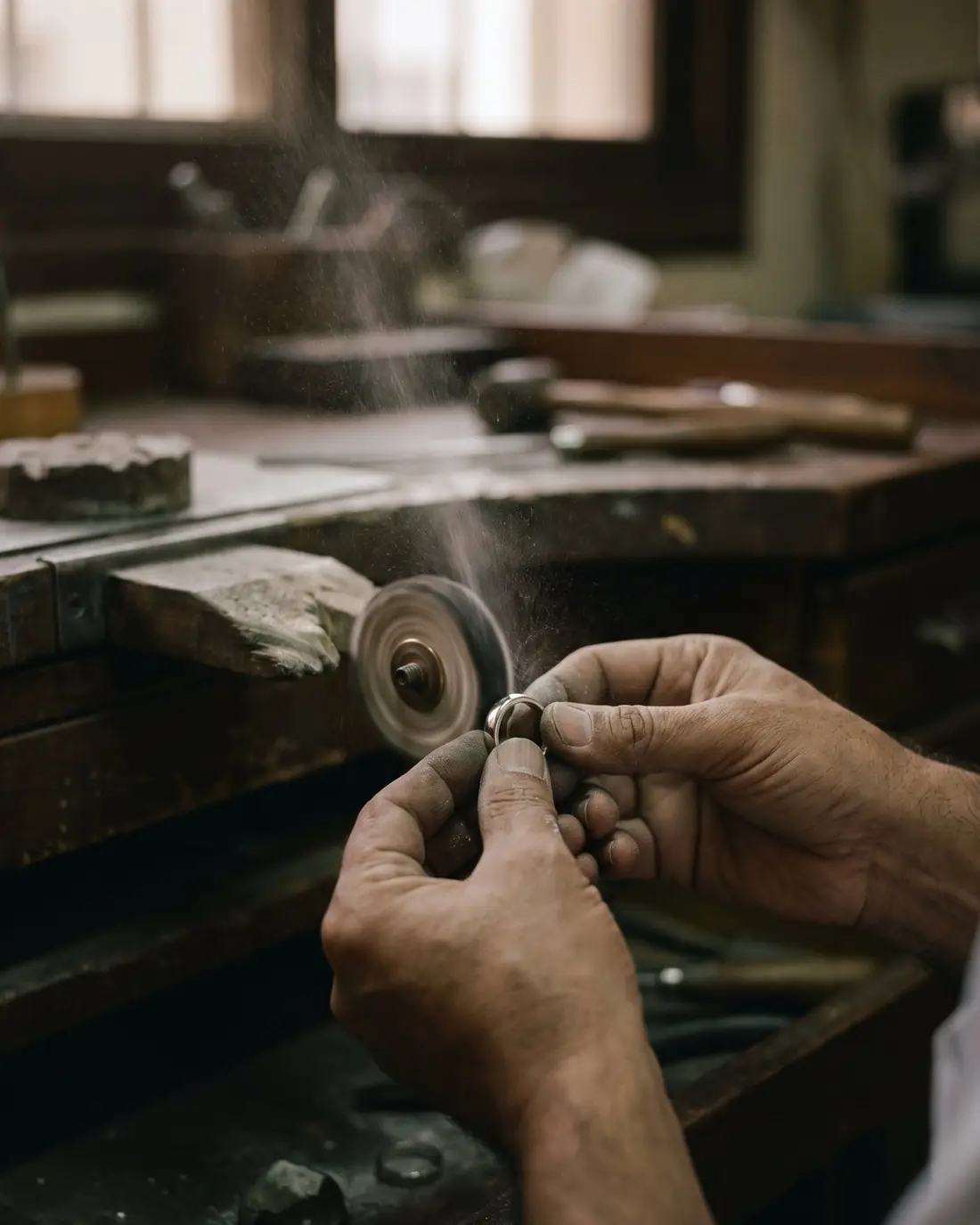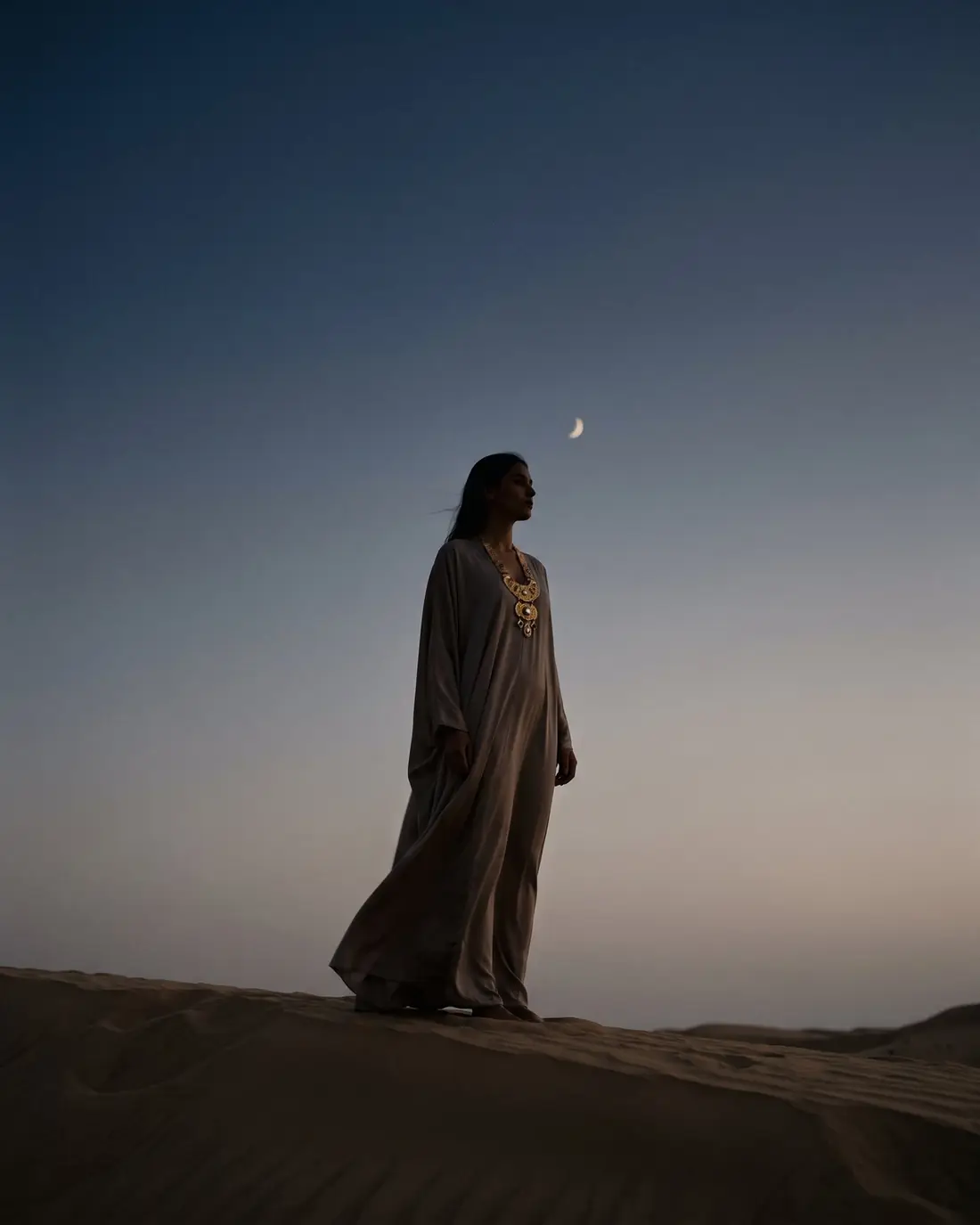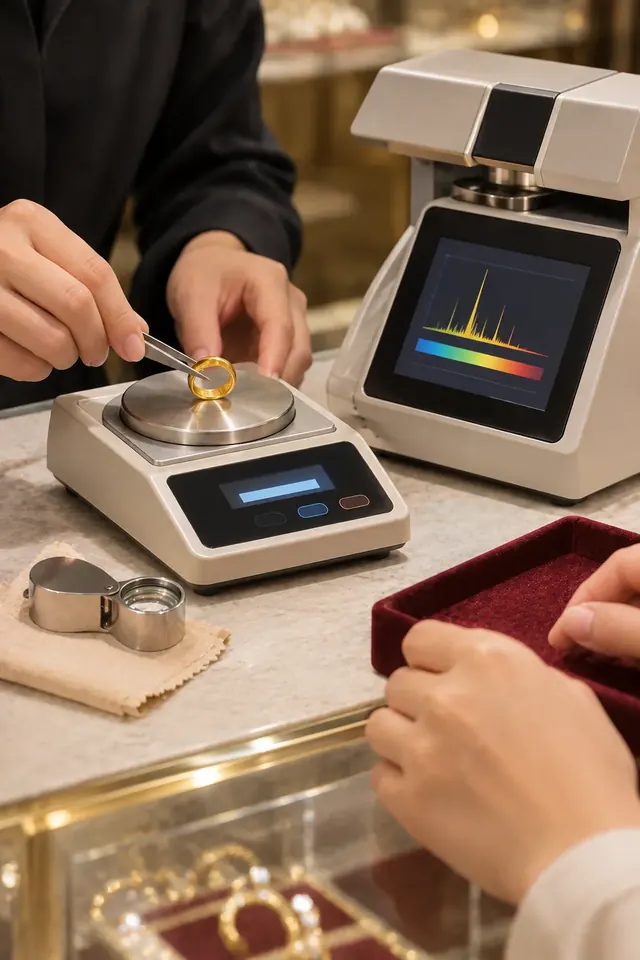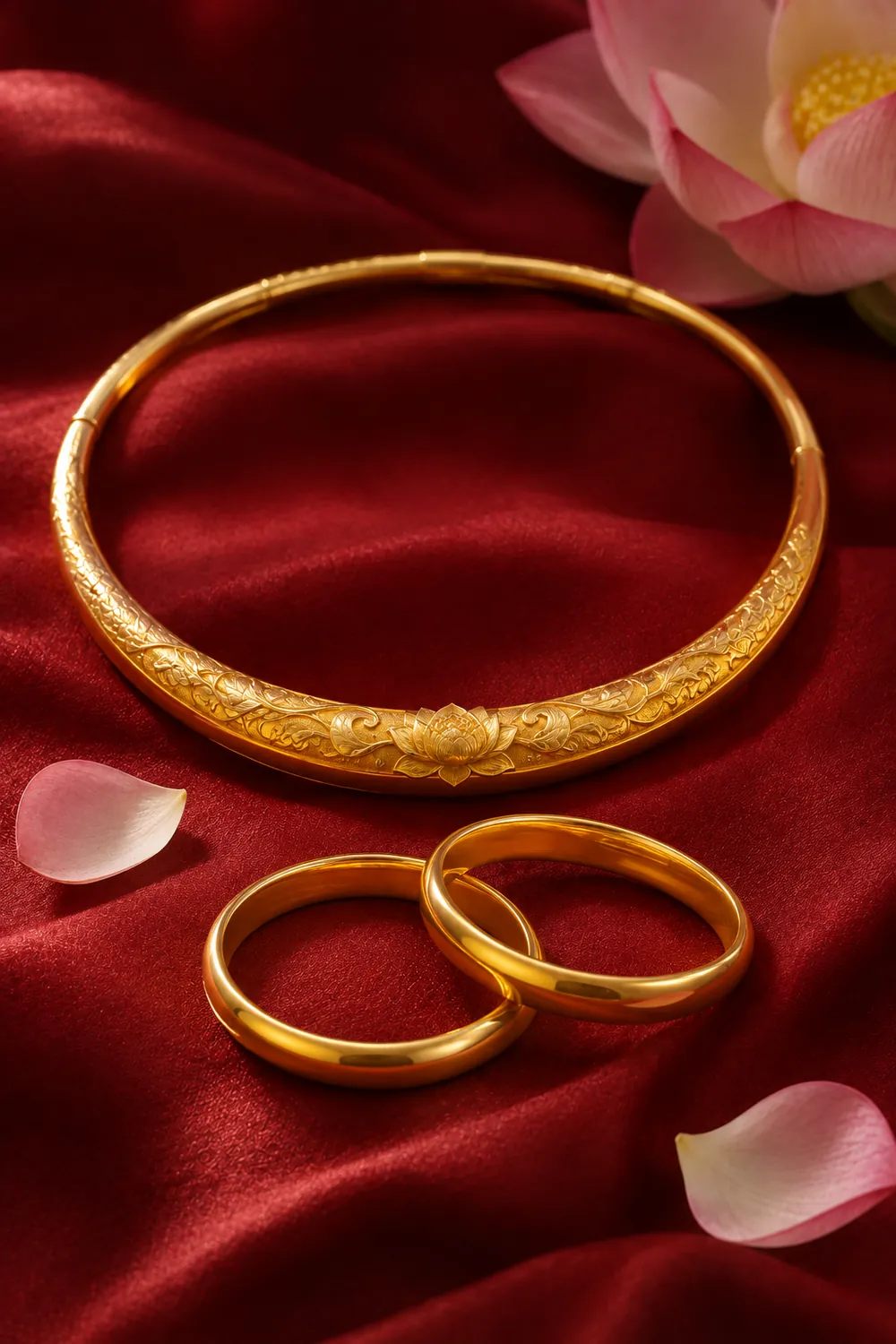
Wedding gold usually includes the bride’s set (earrings, necklace, bracelet or bangle, ring), a wedding neck bangle (kiềng) and the pair of wedding rings. The groom’s family usually gives the bride jewellery at the engagement ceremony; both sets of parents may add gold as a dowry at the wedding. 24K suits the meaning and long-term value; wedding rings are best in 750 for daily wear.
The meaning of wedding gold
At Vietnamese weddings, gold is not only jewellery but a blessing and a nest egg from parents to the new couple. Gold stands for prosperity and permanence; closed circles such as bangles symbolise a complete union. Many families choose 24K, beautiful on the day and valuable for years.
Customs vary by region and family. This guide summarises common practice, especially in southern Vietnam; agree details with both families in advance.
What does wedding gold include?
| Item | Usually given by | Suggested metal | Notes |
|---|---|---|---|
| Earrings | Groom’s mother, at the engagement | 24K or 750 | Almost always included |
| Necklace with pendant | Groom’s family or bride’s parents | 24K, 750 | Double-happiness, dragon-phoenix or heart motifs |
| Bracelet or bangle | Either family | 24K, 23K | Plain or engraved |
| Neck bangle (kiềng) | Groom’s family, sometimes bride’s parents | 24K | Worn at the neck, symbol of union |
| Wedding rings (pair) | Exchanged by the couple | 750 | Worn daily for life |
| Plain rings, gold bars | Parents and relatives | 24K | Usually kept as savings |
Common practice; quantities and givers depend on each family.
When is gold given?
Engagement ceremony (đám hỏi)
After the gift trays are presented and incense is offered to the ancestors, the groom’s mother usually puts earrings (and sometimes a necklace or bracelet) on the bride, formally welcoming her. The groom may give the engagement ring if not given at the proposal.
Wedding ceremony (rước dâu)
At the bride’s home, before the procession, her parents and relatives may give gold as a dowry. The couple exchange rings before the family altar or on stage. The neck bangle is often worn during the procession.
Reception
During the stage ceremony, both sets of parents may give more gold. Many families prefer to do this privately to keep it solemn.
24K or 18K (750)?
- 24K, 23K: for bangles, bracelets, plain rings and items kept as savings. Deep yellow, beautiful in photos, high gold value, low workmanship. Soft, so store carefully.
- Italian 750: for wedding rings, stone-set earrings and fine necklaces worn after the wedding. Hard, refined, holds stones securely.
- Combine: many families choose 24K bangles for the ceremony and 750 rings and earrings for everyday wear.
See Gold purity explained for the differences.
Choosing a wedding neck bangle (kiềng)
A kiềng is a rigid neck ring, usually 24K, with ends shaped as dragon and phoenix, double happiness or lucky motifs. When choosing:
- Try it on so it sits on the collarbone without pressing and suits the áo dài or gown neckline.
- Hollow bangles are light and look large; solid ones are heavier and hold more gold value.
- Ask for the gold weight (in chỉ) and the workmanship charge of each design.
Budgeting
There is no required amount of wedding gold; what matters is what suits both families. A simple approach:
- List the items (earrings, necklace, bracelet, kiềng, rings) and who is responsible for each.
- Choose the metal for each by purpose: savings (24K) or daily wear (750).
- Estimate each item’s weight in chỉ; ask the shop for typical weights.
- Multiply by the day’s reference gold price, add workmanship and stones, and allow 5–10% for price changes.
- Buy once designs are agreed; the price follows the gold price at payment.
Gold prices change daily; see Ngọc Diệp’s today’s gold price. Pricing is explained in How jewellery is priced and traded in.
Timeline
| When | What to do |
|---|---|
| 2–3 months before | Agree the list with both families, set a budget |
| 6–8 weeks before | View designs, size rings, order custom pieces |
| 3–4 weeks before | Buy the set and kiềng; engrave the rings |
| 1–2 weeks before | Collect, try on, resize if needed, check invoices and guarantees |
| On the day | Hand items to whoever presents them, in nice boxes |
What to check when buying
- The invoice lists each item with purity, weight, unit price and workmanship.
- The purity stamp on each item matches the invoice.
- Clasps, earring backs and bracelet hinges are secure.
- Ask about trade-in; 24K is bought and sold at the market price.
- Keep all invoices and guarantees with the jewellery boxes.
Caring for wedding gold afterwards
After the wedding, store 24K bangles and bracelets separately in lined boxes to avoid scratches. 750 rings and earrings can be worn daily; remove them for heavy work, sport or chemicals. Bring jewellery in periodically for cleaning, polishing and clasp checks. Jewellery bought at Ngọc Diệp is cleaned free for life. See Caring for jewellery.
Quick answers
What does Vietnamese wedding gold include?
Usually earrings, a necklace, a bracelet or bangle, a neck bangle (kiềng) and the wedding rings; quantities depend on each family.
Who gives the bride earrings?
Traditionally the groom’s mother puts earrings on the bride at the engagement ceremony.
Should wedding gold be 24K or 18K?
Bangles, bracelets and savings items in 24K; wedding rings and daily jewellery in 750 (18K).
How early should we buy?
Start viewing 6–8 weeks ahead and buy about 3–4 weeks before the wedding to allow resizing and engraving.
Who prepares the kiềng?
Usually the groom’s family, though in some families the bride’s parents give it; agree in advance.
Can Ngọc Diệp help plan a full wedding gold set?
Yes. The shop advises on items, metals and budget for the whole set; message Zalo +84 916 600 660 to book.